CBSE CT & AI · NEP 2020
Computational Thinking & Artificial Intelligence for Schools
Integrated Computational Thinking & AI Programme for Schools
2500+
Schools Equipped
250K+
Students Trained
12+
Years Experience




CBSE CT & AI · NEP 2020
2500+
Schools Equipped
250K+
Students Trained
12+
Years Experience
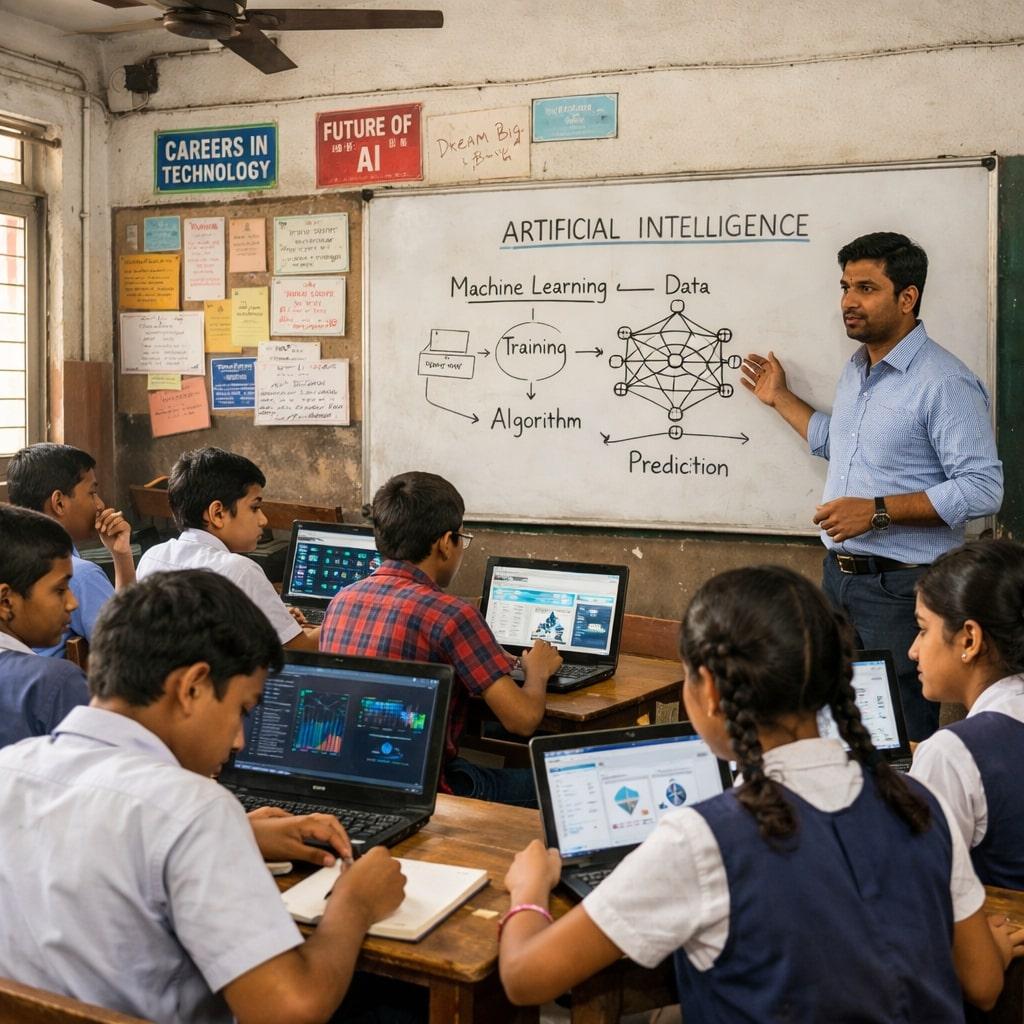
The Central Board of Secondary Education now treats Computational Thinking and Artificial Intelligence as a single educational thread—not two separate add-ons. NEP 2020 and NCF-SE call for technology-enabled, interactive learning; CBSE’s CT&AI framework answers that with thinking skills that span subjects, foundational AI literacy, ethical reflection, and unplugged activities. RoboSpecies helps schools translate official handbooks and skill-subject syllabi into labs, kits, and classroom practice your teachers can sustain.
Official direction
CT & AI Curriculum for Classes III–VIII (2026–27)
Four Pillars of the CT & AI Framework
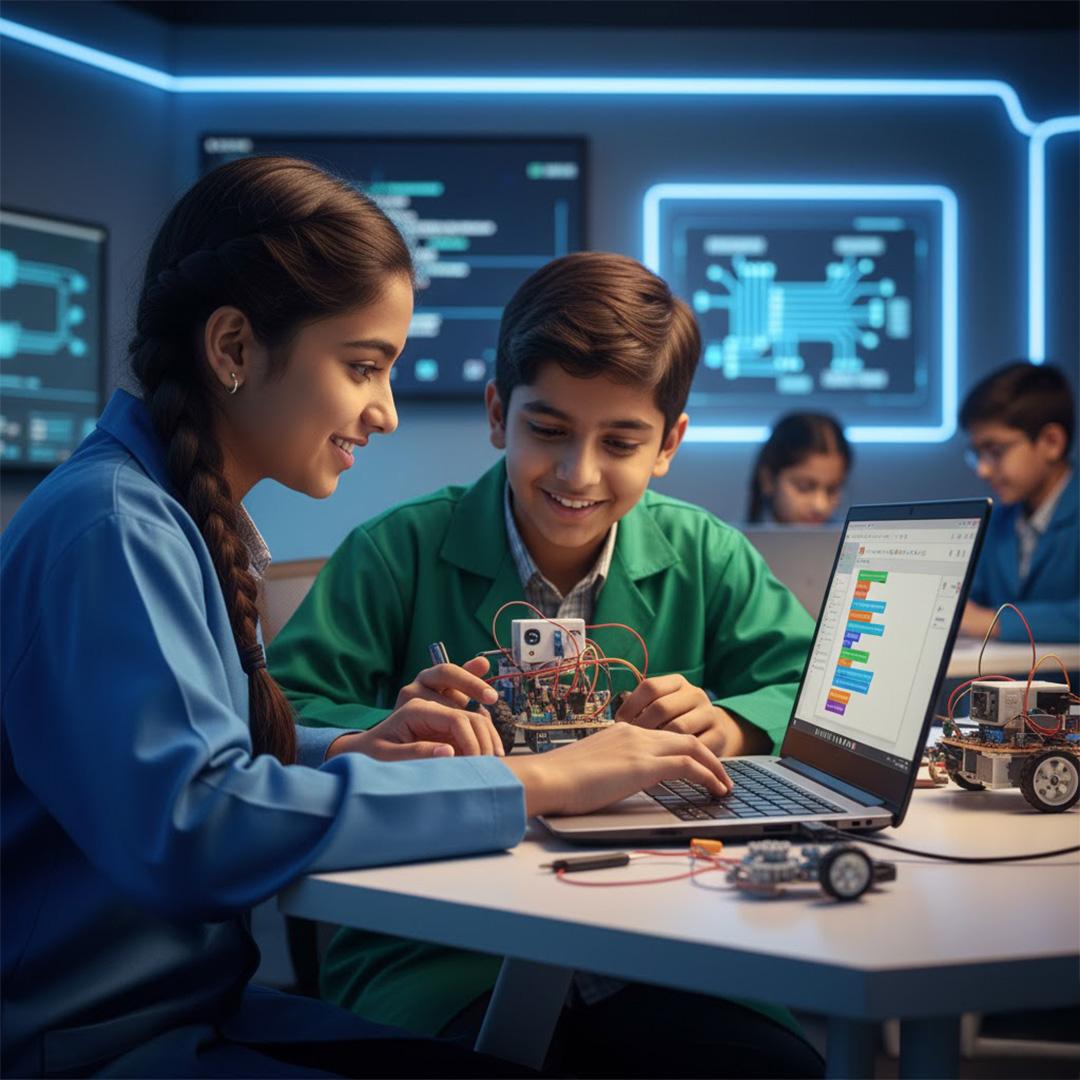
Decomposition, pattern recognition, abstraction, and algorithm design—applied through maths-linked problems and unplugged activities before screens.
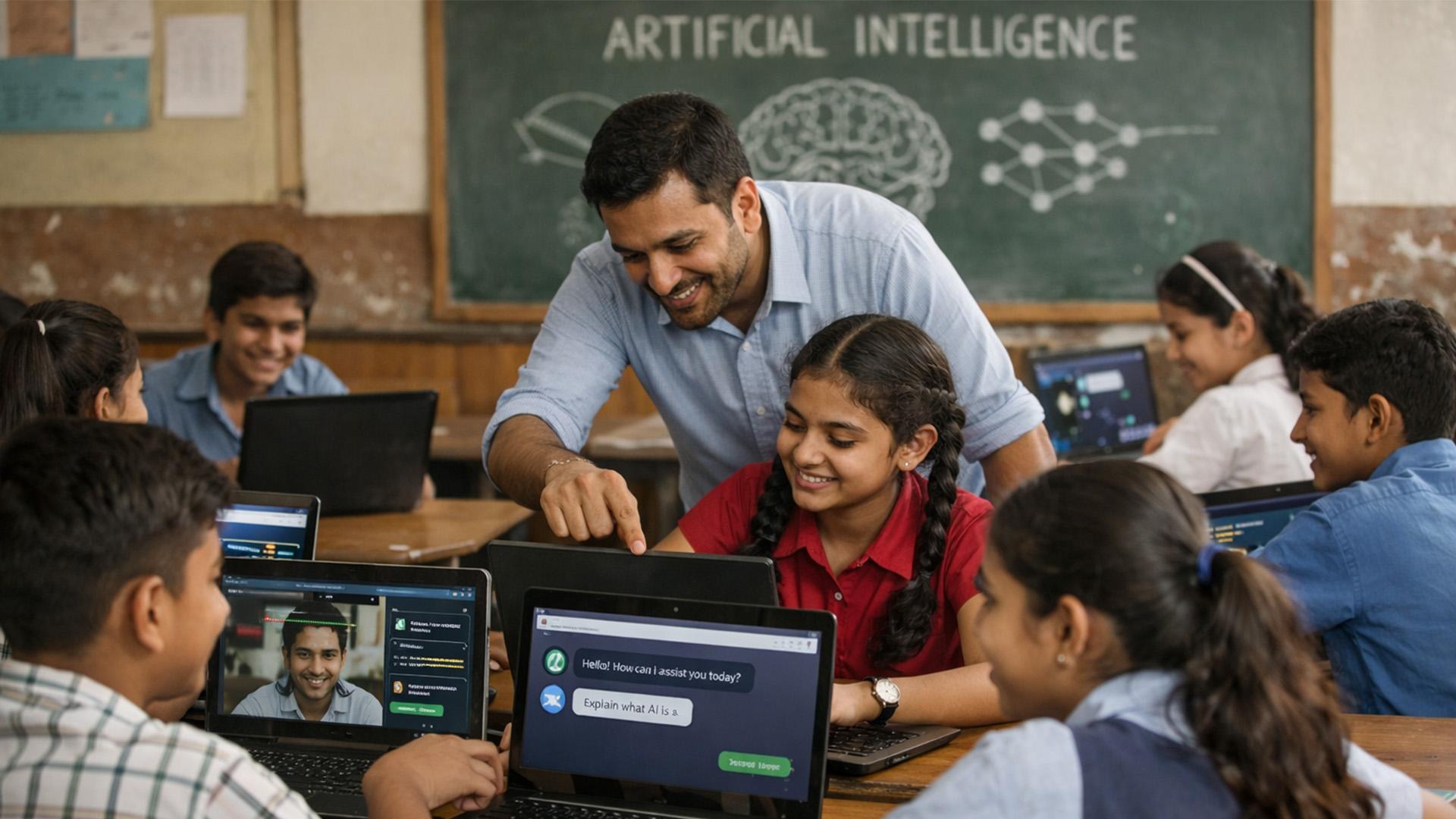
AI project lifecycle, data-driven decisions, domains such as computer vision and NLP, plus awareness of bias, access, and fairness.
Reflective discussions on how AI affects society, SDGs, and responsible use—central to CBSE’s integrated framework.
Games and paper-based tasks that build intuition before coding—matching CBSE’s facilitative, process-over-answer pedagogy.
CBSE Transition & Curriculum Update (Circular 2026)
Subject Code 417 · Class IX (2024–25 syllabus reference)
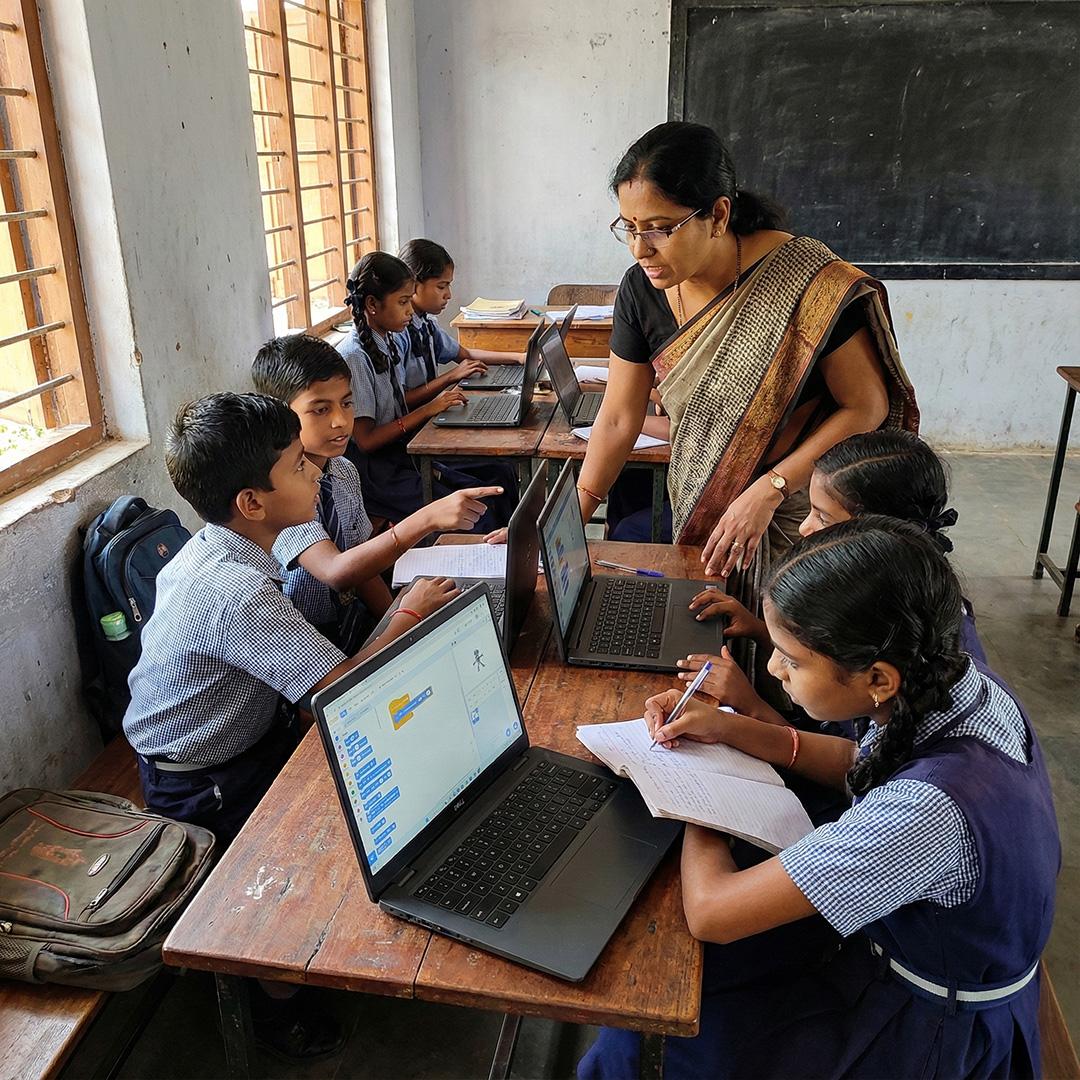
For schools referencing the established AI skill curriculum (Code 417), Class IX focuses on becoming AI-ready through games, multisensorial activities, and hands-on projects. Total assessment is typically 100 marks (50 theory + 50 practical), including employability skills, a Python practical file, examination, viva, and a project tied to Sustainable Development Goals.
Human–machine interaction, AI domains, project cycle, and ethical brainstorming around real problems.
Scoping problems, sourcing reliable data, visualisation, and introductory modelling concepts.
Statistics and probability foundations that support data interpretation and AI readiness.
Introductory generative AI awareness plus hands-on Python (practical file, viva, and board-style programs).
Identify AI in daily life; explore data, computer vision, and NLP domains; scope AI projects ethically; visualise data; understand generative AI basics; and write introductory Python—aligned to CBSE’s published unit structure for Subject 417.
Subject Code 843 · Class XI
Class XI Artificial Intelligence (Code 843) prepares students for further study and careers as AI-aware citizens and developers. The course blends theory and extensive practical work—including capstone projects, industry certifications, bootcamps or internships, practical files, written exams, and viva.
Structured coding practice supporting AI projects and practical examinations.
Collection through analysis, machine learning algorithms, and capstone project design.
Connections between language, computing, and AI applications in authentic contexts.
AI ethics and values, bootcamps or internships, and certifications such as IBM Skills Build where offered.
On your campus
Workshops on CBSE’s facilitative approach—prompts, discussion, and safe-to-fail exploration rather than answer-led drilling.
Robotics, electronics, and coding hardware that supports CT activities and AI project cycles in a composite or STEM lab.
Term plans that map to handbook-style thinking questions, practical files, and portfolio or capstone expectations.
Share your grades, timetable, and existing lab space—we will outline a phased implementation aligned to the latest CBSE CT&AI and skill-education guidance.
Why Choose RoboSpecies for CT & AI Labs
We combine robotics lab expertise with curriculum-aware facilitation—so Computational Thinking and Artificial Intelligence become daily habits, not a one-term novelty.
What schools gain when CT & AI are implemented together
Content and labs structured around published CBSE CT&AI frameworks, skill subject syllabi, and NEP/NCF-SE goals.
CBSE emphasises CT without dependence on a single vendor—we design activities that transfer across tools and kits.
Support for weaving CT&AI questions into regular maths periods, as CBSE recommends for Classes III–VIII.
Refresher sessions, spare parts, and troubleshooting so programmes continue after launch—not only on day one.
A step-by-step pathway from basic concepts to innovation leadership

Empathize, Learn & Unlearn

Problem Definition, Analysis & Statistics

Teamwork, Collaboration & Ideation

Coding, Construction & Prototyping

Presentation, Exhibition, Competitions






“I was struggling to find the best Robotics & AI solution, and I found RoboSpecies, which has turnkey solutions from setting up the lab to providing customized training for schools.”
Arnav Singh
STEM Lead, Delhi NCR

“I have experienced RoboSpecies services for more than a year now, and I have seen a significant improvement in my child’s understanding of coding and hands-on mechanical designs.”
Srinika’s Mother
Grade: 7th Parent

“I really appreciate the quality of components delivered by RoboSpecies, combined with their hassle-free technical support and dedicated trainers.”
Mrs. Jyoti Rana
Principal, APS Noida

Get in touch with our specialists for custom solutions
Ready to transform your school into a vibrant center for hands-on learning? Connect with our educational consultants for turnkey ATL, AI & Robotics lab setups tailored for CBSE & NEP 2020.
2,500+ Schools Covered
Trusted by leading CBSE, ICSE & International institutions nationwide.
Complete Turnkey Equipment & Kits
Robotics, AI, IoT & electronics kits with grade-wise student workbooks.
Certified Faculty Enablement
Hands-on teacher training workshops with continuous mentor support.
Direct Support & Enquiries
Robospecies Technologies Private Limited
0120-4245860support@robospecies.comD-66, First Floor, Sector-7, Noida Gautam Buddha Nagar, Uttar Pradesh, 201301
Fill out the form below and our team will get back to you.
Are the Class III–VIII CT & AI books textbooks?
No. CBSE positions them as resource books—not textbooks—to use alongside NCERT Mathematics, following the same chapter sequence. Teachers facilitate thinking questions and activities rather than delivering fixed answers.
What happens to Artificial Intelligence (Subject Code 417) in Class IX?
Per CBSE Circular Acad-18/2026, standalone AI courses run till 2025–26 are discontinued for Class IX from session 2026–27 onwards. Class X in 2026–27 continues the scheme followed in 2025–26. NCERT will provide CT&AI modules for Classes IX–XII for 2026–27 as modules for internal assessment—confirm the latest circulars on cbseacademic.nic.in.
What does Class IX AI (417) cover for schools still on the 2024–25 curriculum?
The skill subject (100 marks: 50 theory + 50 practical) includes AI reflection and ethics, data literacy, math for AI, generative AI, introductory Python, employability skills, and a project linked to Sustainable Development Goals.
What is Senior Secondary AI (Subject Code 843)?
Class XI AI (843) is a skill subject covering Python, data literacy, machine learning algorithms, linguistics and computer science, AI ethics, capstone projects, and industry certifications—100 marks with substantial practical and project work.
How can RoboSpecies support our school?
We help with lab infrastructure, coding and robotics kits, facilitator training aligned to CBSE outcomes, and project-based sessions that mirror CT&AI goals—decomposition, algorithms, data, and responsible AI use.

Robospecies is an edtech company that specialises in establishing Robotics, Coding, AI, STEM, STEAM, Tinkering, 3D Printing, IoT, AR ,VR-based labs in schools.
Important Links
Follow us


Address: D-66 1st Floor,
D Block, Sector 7, Noida,
Uttar Pradesh 201301
Copyright © 2026 RoboSpecies All Rights Reserved.