CBSE · NEP 2020
Composite Skill Lab Setup for Schools | Robotics, AI & Coding Labs
Multidisciplinary skill labs that connect theory, making, and real-world practice
2500+
Schools Equipped
250K+
Students Trained
12+
Years Experience



CBSE · NEP 2020
2500+
Schools Equipped
250K+
Students Trained
12+
Years Experience
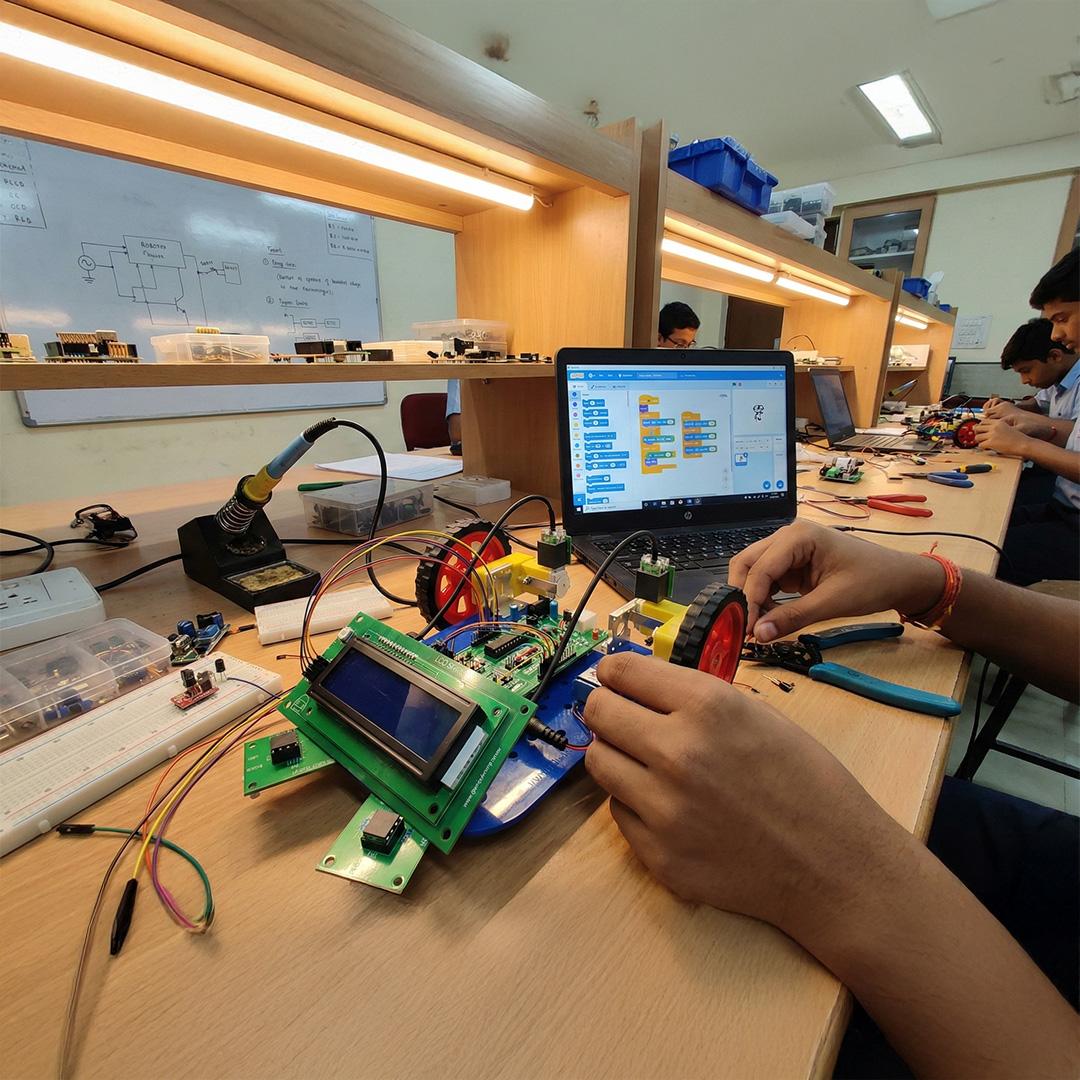
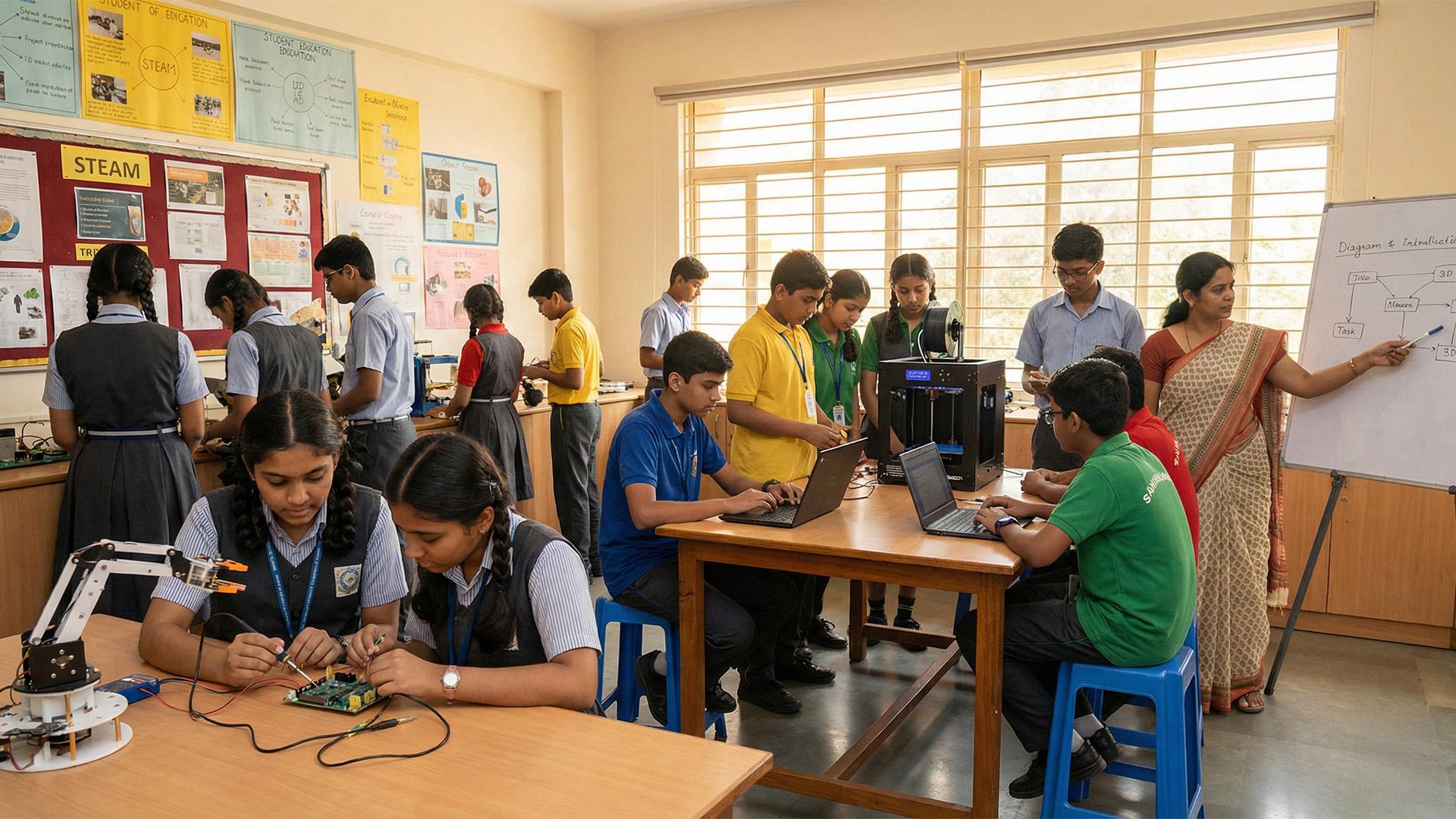
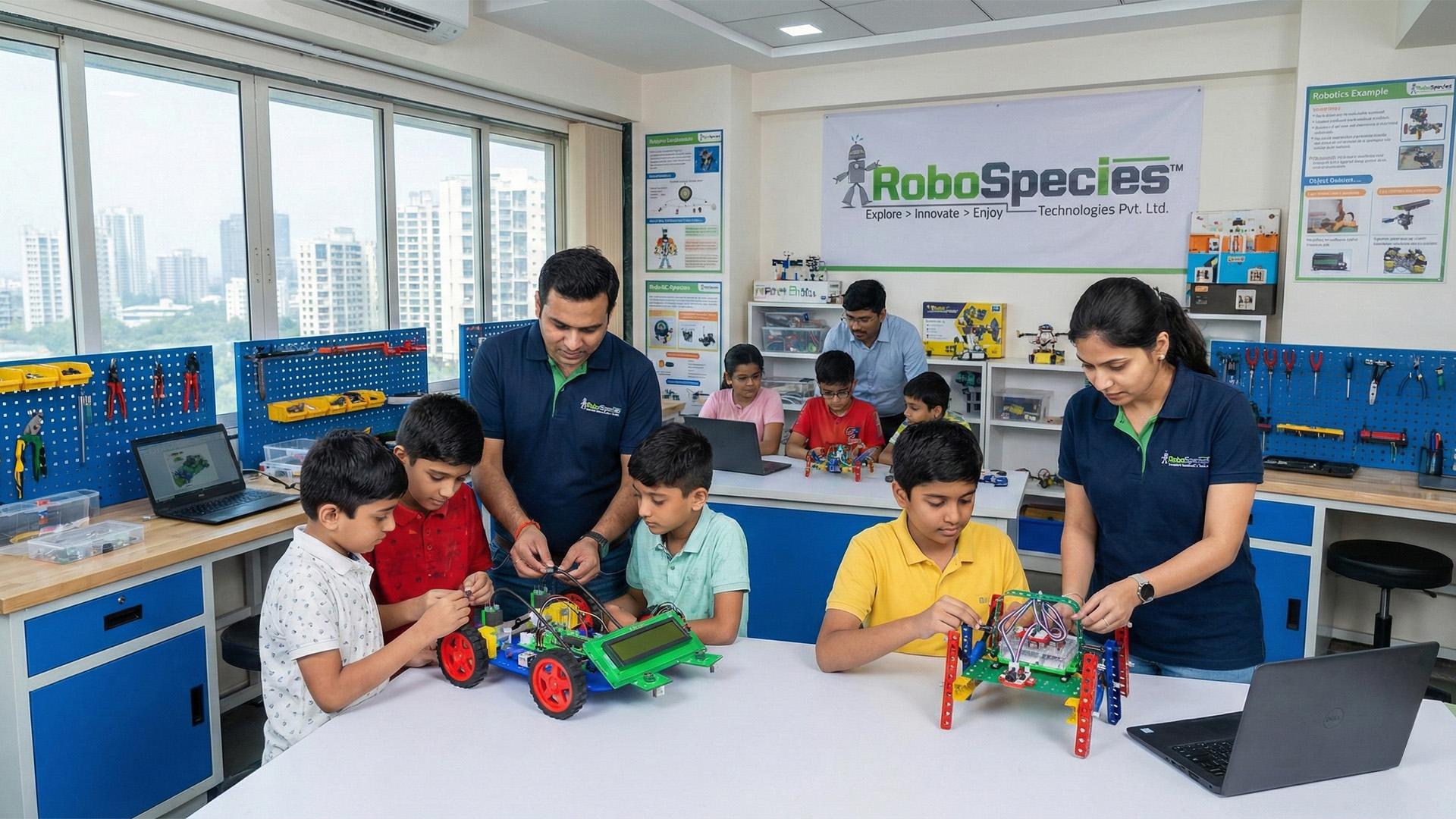
A Composite Skill Lab is a shared makerspace for applied learning—where AI awareness, robotics, electronics, coding, and digital creativity meet in structured projects. The goal is simple: help learners move from memorising facts to building competence, in line with National Education Policy (NEP) 2020 and the National Curriculum Framework for School Education (NCF-SE). RoboSpecies designs these rooms end-to-end so your teachers spend time mentoring students, not hunting for adapters.
Compliance & planning

Outcomes
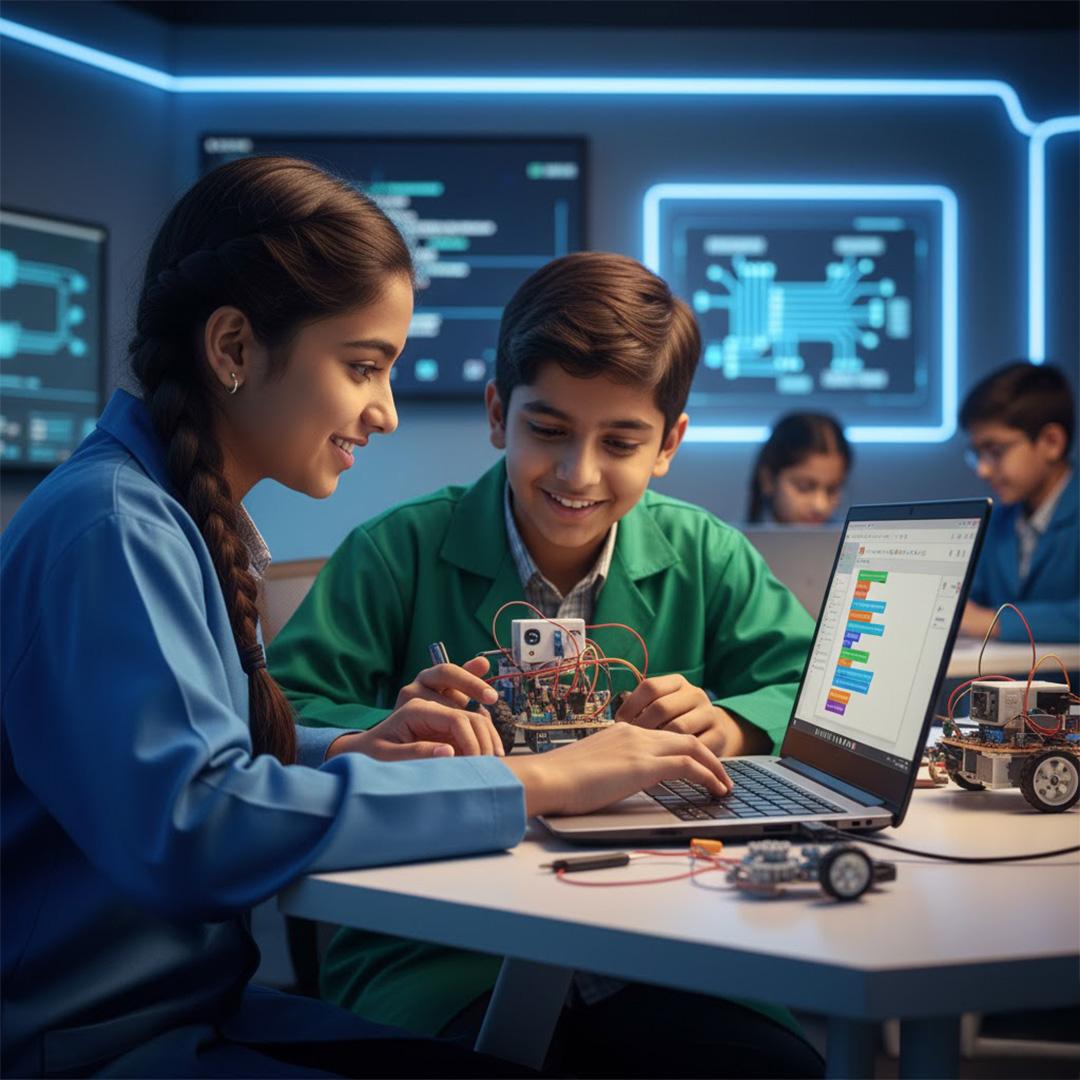
Students rehearse real tasks—building, testing, presenting—that mirror how modern teams work, not only how exams are written.
Abstract ideas from science and maths land on the bench: sensors, circuits, code, and simple machines connect in one coherent workflow.
Activities can track CBSE skill components, STEM projects, and interdisciplinary milestones so the lab reinforces timetabled subjects.
Problem framing, iteration, collaboration, and digital literacy become daily habits—not occasional competition events.
Implementation support
Safe workflows, durable furniture, reachable power, lockable storage, and demo zones sized for your class strength.
Robotics, microcontroller ecosystems, electronics practice sets, add-on modules, and optional digital fabrication where you need it.
Project sequences and pacing notes that sit beside your existing scheme—so skill periods feel planned, not improvised.
Book a discovery call—we will share sample layouts, indicative bill-of-materials, and a training outline tailored to your city and board context.
Why RoboSpecies
We specialise in school labs that stay switched on after the ribbon is cut: dependable hardware, honest scoping, and educators who feel backed—not left with a cupboard of unused gadgets.
What partner schools value about our composite skill lab programs
Hardware and lesson paths are chosen for repeated classroom use—not demo-day fragility.
Multidisciplinary projects, choice of activities, and emphasis on creativity match the spirit of experiential learning.
Training, troubleshooting, and refresher touchpoints so adoption continues after inauguration day.
Start with a strong core lab and expand modules as budgets and timetables allow—without redesigning from scratch.
A step-by-step pathway from basic concepts to innovation leadership

Empathize, Learn & Unlearn

Problem Definition, Analysis & Statistics

Teamwork, Collaboration & Ideation

Coding, Construction & Prototyping

Presentation, Exhibition, Competitions








“I was struggling to find the best Robotics & AI solution, and I found RoboSpecies, which has turnkey solutions from setting up the lab to providing customized training for schools.”
Arnav Singh
STEM Lead, Delhi NCR

“I have experienced RoboSpecies services for more than a year now, and I have seen a significant improvement in my child’s understanding of coding and hands-on mechanical designs.”
Srinika’s Mother
Grade: 7th Parent

“I really appreciate the quality of components delivered by RoboSpecies, combined with their hassle-free technical support and dedicated trainers.”
Mrs. Jyoti Rana
Principal, APS Noida

Get in touch with our specialists for custom solutions
Ready to transform your school into a vibrant center for hands-on learning? Connect with our educational consultants for turnkey ATL, AI & Robotics lab setups tailored for CBSE & NEP 2020.
2,500+ Schools Covered
Trusted by leading CBSE, ICSE & International institutions nationwide.
Complete Turnkey Equipment & Kits
Robotics, AI, IoT & electronics kits with grade-wise student workbooks.
Certified Faculty Enablement
Hands-on teacher training workshops with continuous mentor support.
Direct Support & Enquiries
Robospecies Technologies Private Limited
0120-4245860support@robospecies.comD-66, First Floor, Sector-7, Noida Gautam Buddha Nagar, Uttar Pradesh, 201301
Fill out the form below and our team will get back to you.
Does our school need a Composite Skill Lab under CBSE?
CBSE-affiliated schools are expected to implement composite skill laboratory provisions as part of skill education reforms. Exact timelines and norms can vary by notification—your school should confirm the latest CBSE circulars while we help you plan infrastructure and learning resources.
How much space should we plan for?
Many schools plan either one consolidated lab (often around 600 sq. ft. for Grades VI–XII) or two smaller labs (commonly near 400 sq. ft. each) for different stages. Final dimensions should follow your campus layout, batch size, and the latest board guidance.
What can students learn in the lab?
Typical pathways include robotics and coding, electronics and IoT basics, AI awareness labs, digital creativity, and project work that maps to skill subjects and STEM goals—always adapted to your students’ age and board scheme.
Do you train our teachers?
Yes. We run onboarding workshops, lesson sequencing support, and safety-aware practice so faculty can run sessions confidently—even without deep prior technical backgrounds.
Can RoboSpecies supply kits and turnkey fit-out?
We provide modular labs, Robotrix kits, furniture and power layouts, storage, and ongoing technical assistance so the room stays usable across terms and upgrades.

Robospecies is an edtech company that specialises in establishing Robotics, Coding, AI, STEM, STEAM, Tinkering, 3D Printing, IoT, AR ,VR-based labs in schools.
Important Links
Follow us


Address: D-66 1st Floor,
D Block, Sector 7, Noida,
Uttar Pradesh 201301
Copyright © 2026 RoboSpecies All Rights Reserved.